Carrara in its grades, from statuario to bianco P. Portoro, the black veined with gold from Portovenere. Bardiglio, the blue-grey of the Versilia. Rosso Verona, from the Veronese hills. Plus rarer marbles project by project: cipollino, breccia, pavonazzetto, antico verde.
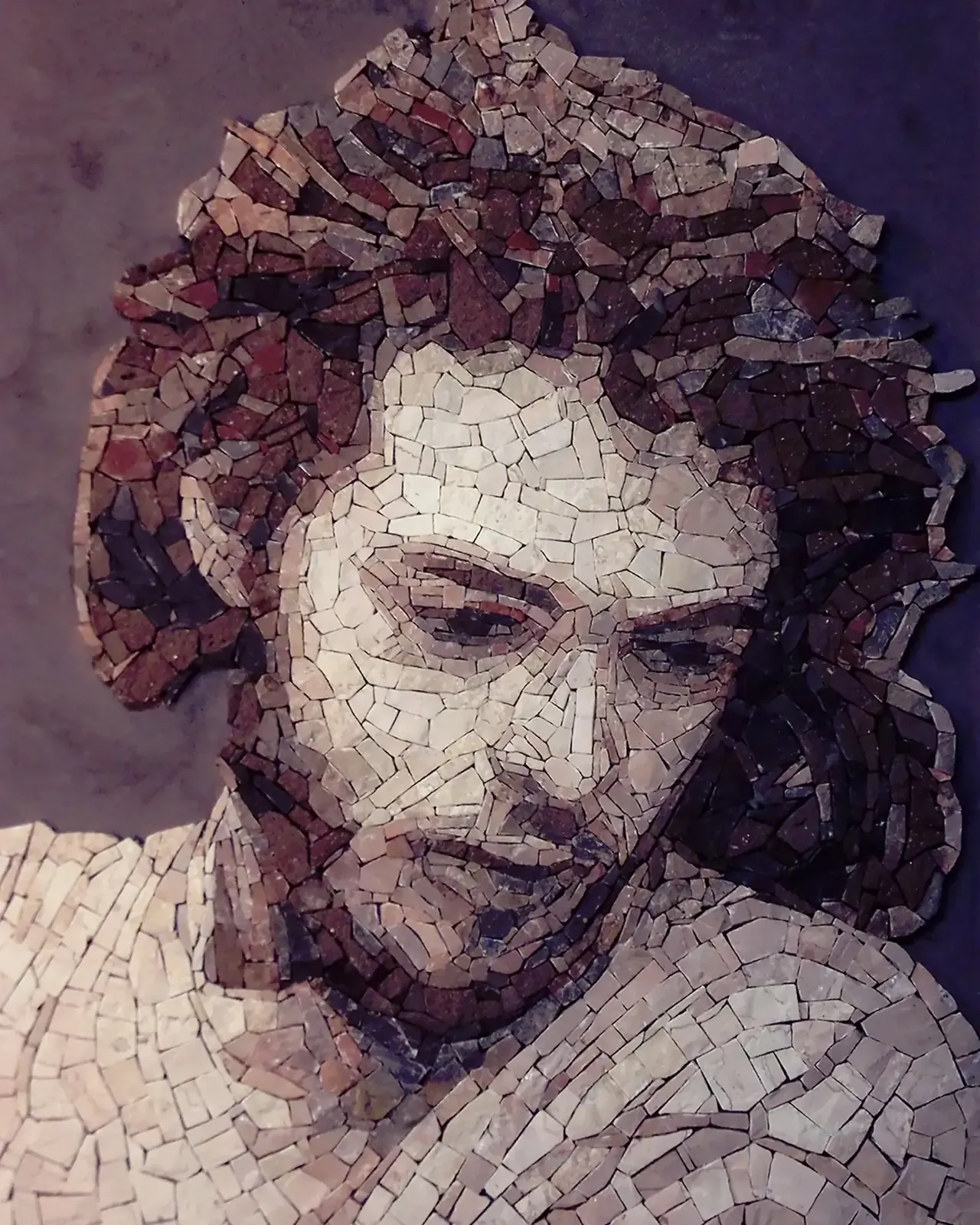
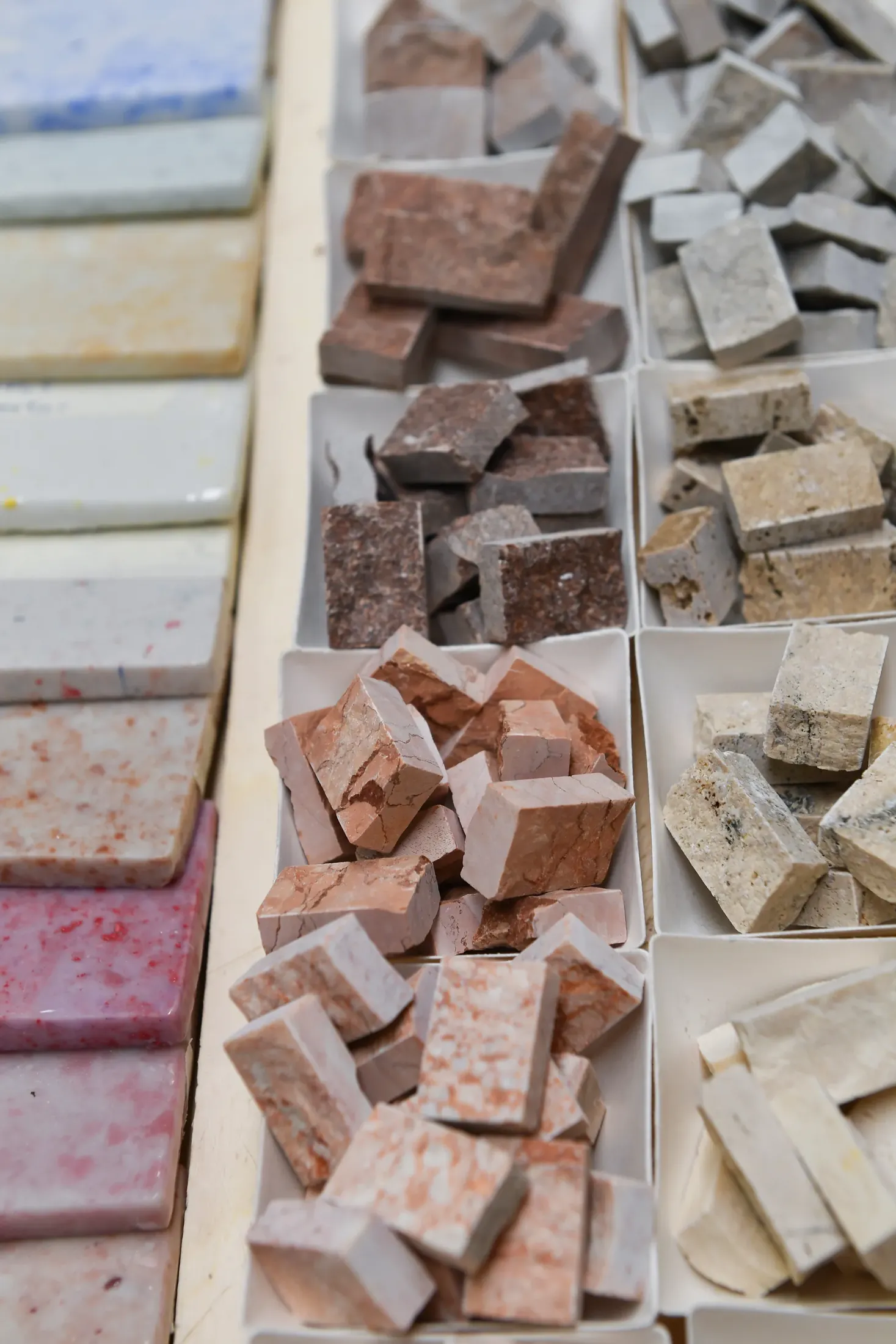
We select the best marbles in person at our suppliers, choosing the colors closest to the bozzetto of each commission. Stones are then cut at the studio. Marble does not age. Carlo Scarpa understood this when he laid the floor of the Olivetti shop on Piazza San Marco. We work in the same line.
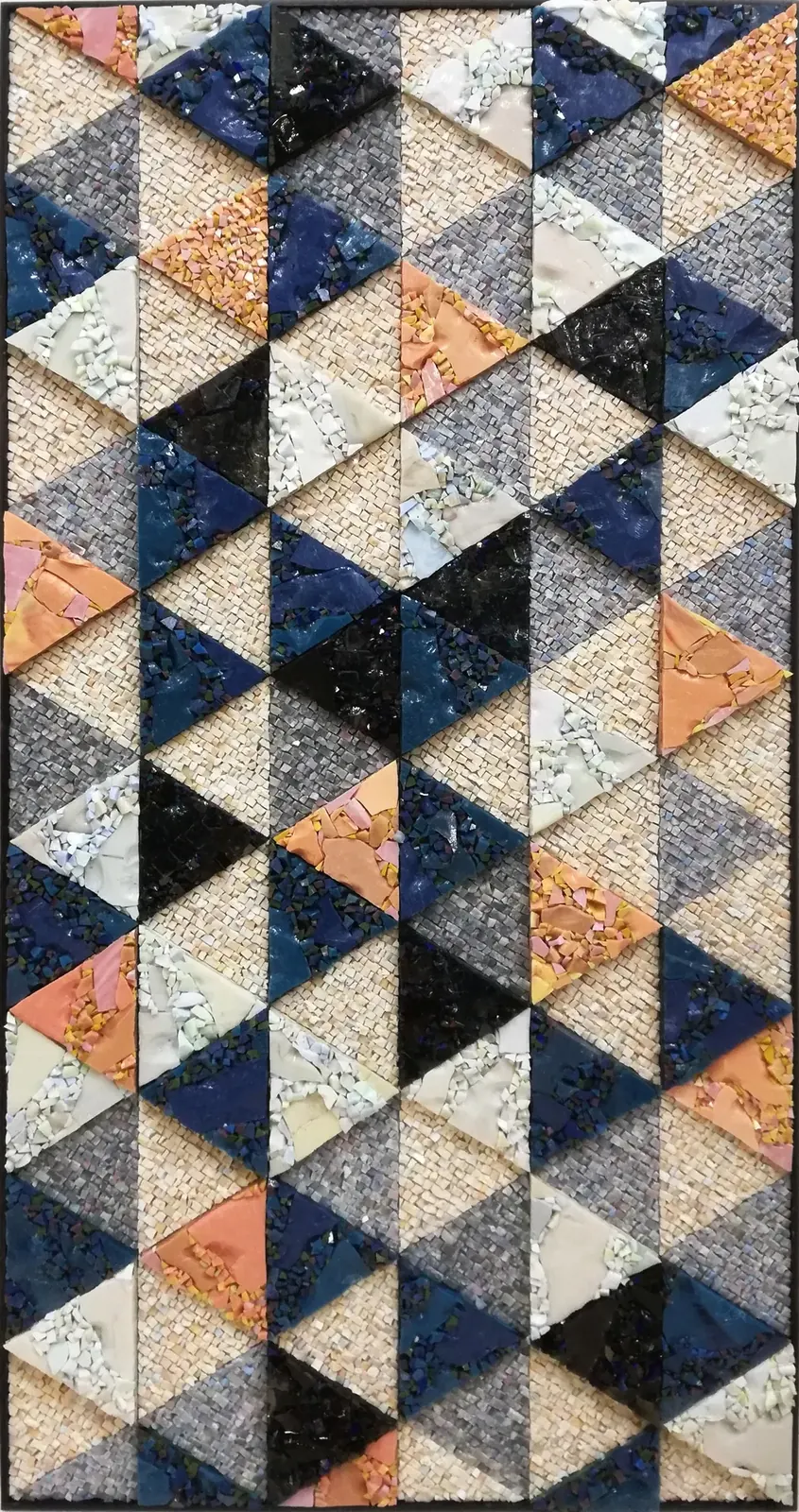
Smalto is a paste of glass, opaque by definition, made for mosaic and for nothing else. Glass and metal oxides are fused at high heat in ceramic crucibles, drawn out by hand to the precise tone, then poured onto stone slabs and slowly annealed.
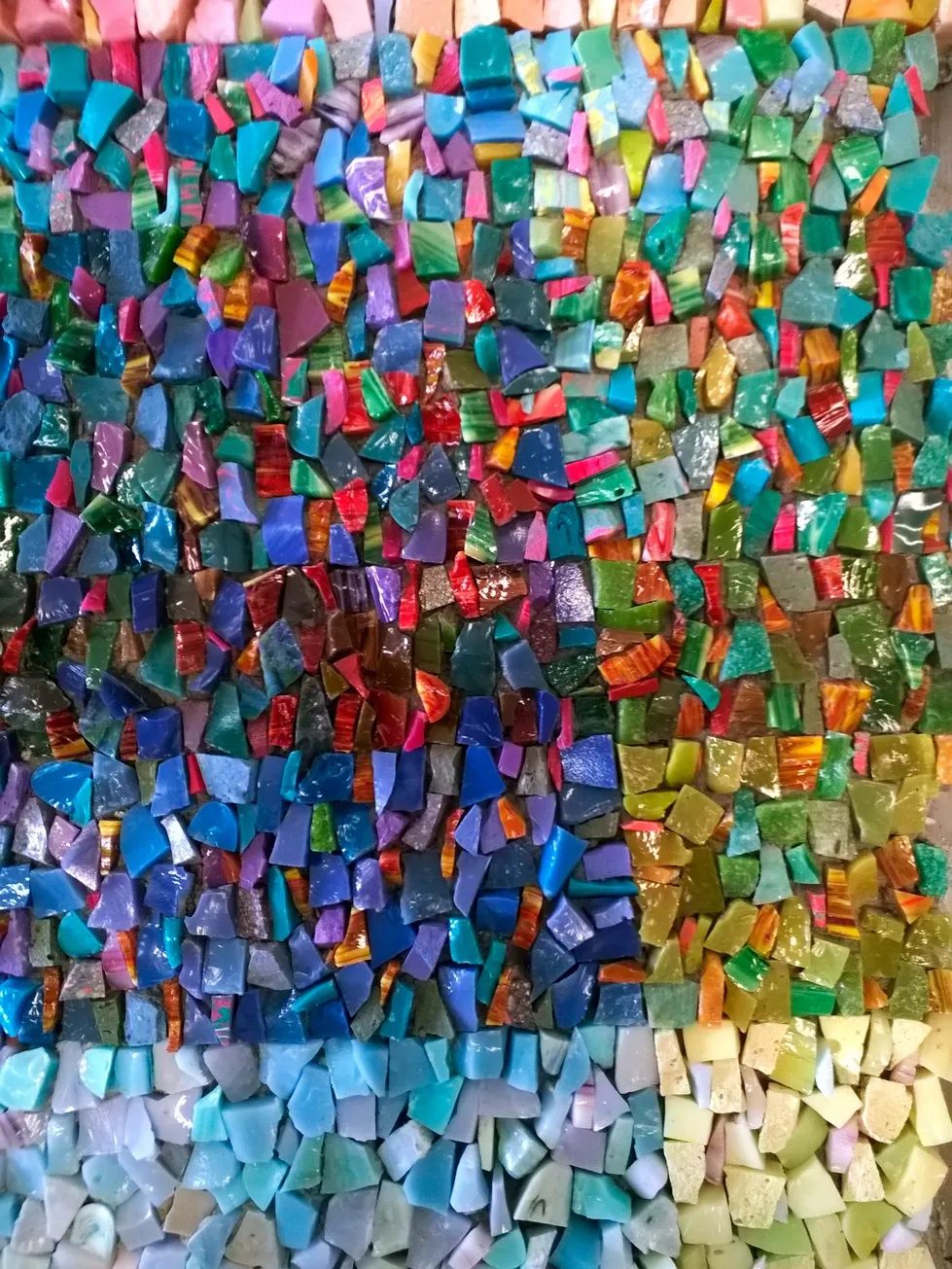
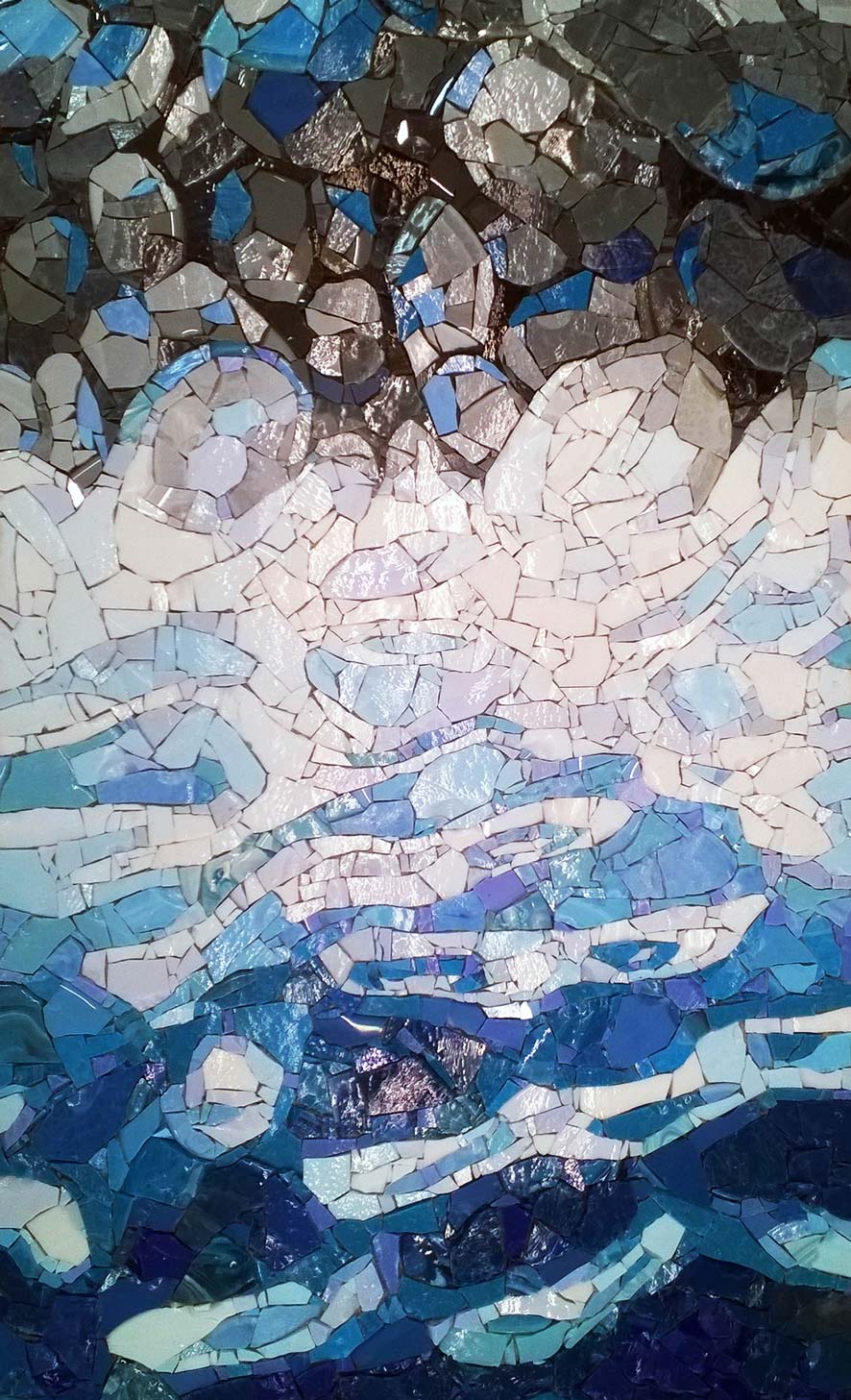
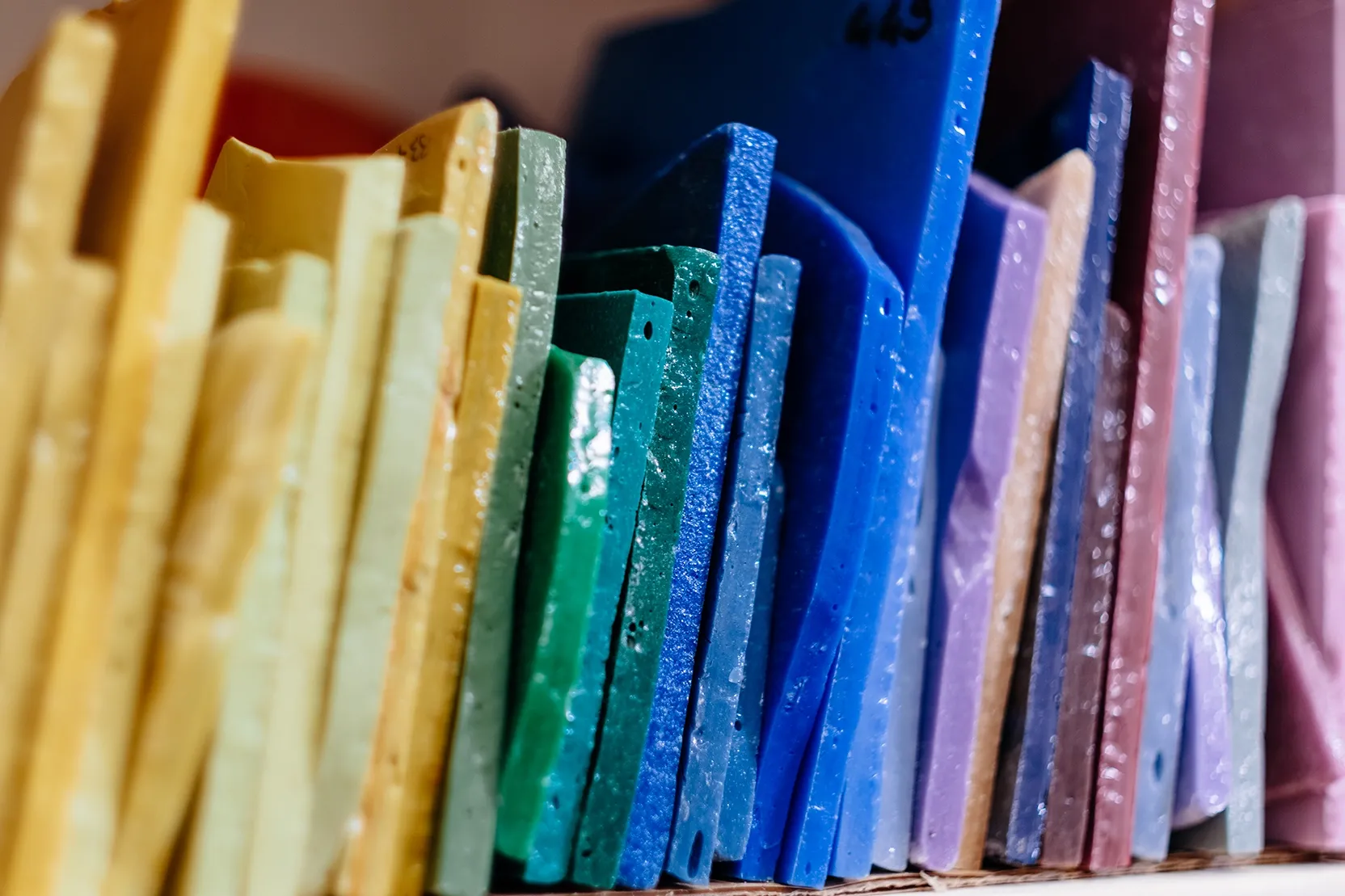
Pulling the colour to its exact intensity has a name in Italian, tirare il colore, and it can take days. The flat slabs are then cut at an angle, and the sheared face becomes the visible side. We pick the shades in person at the furnace, matching each colour to the bozzetto of the commission.
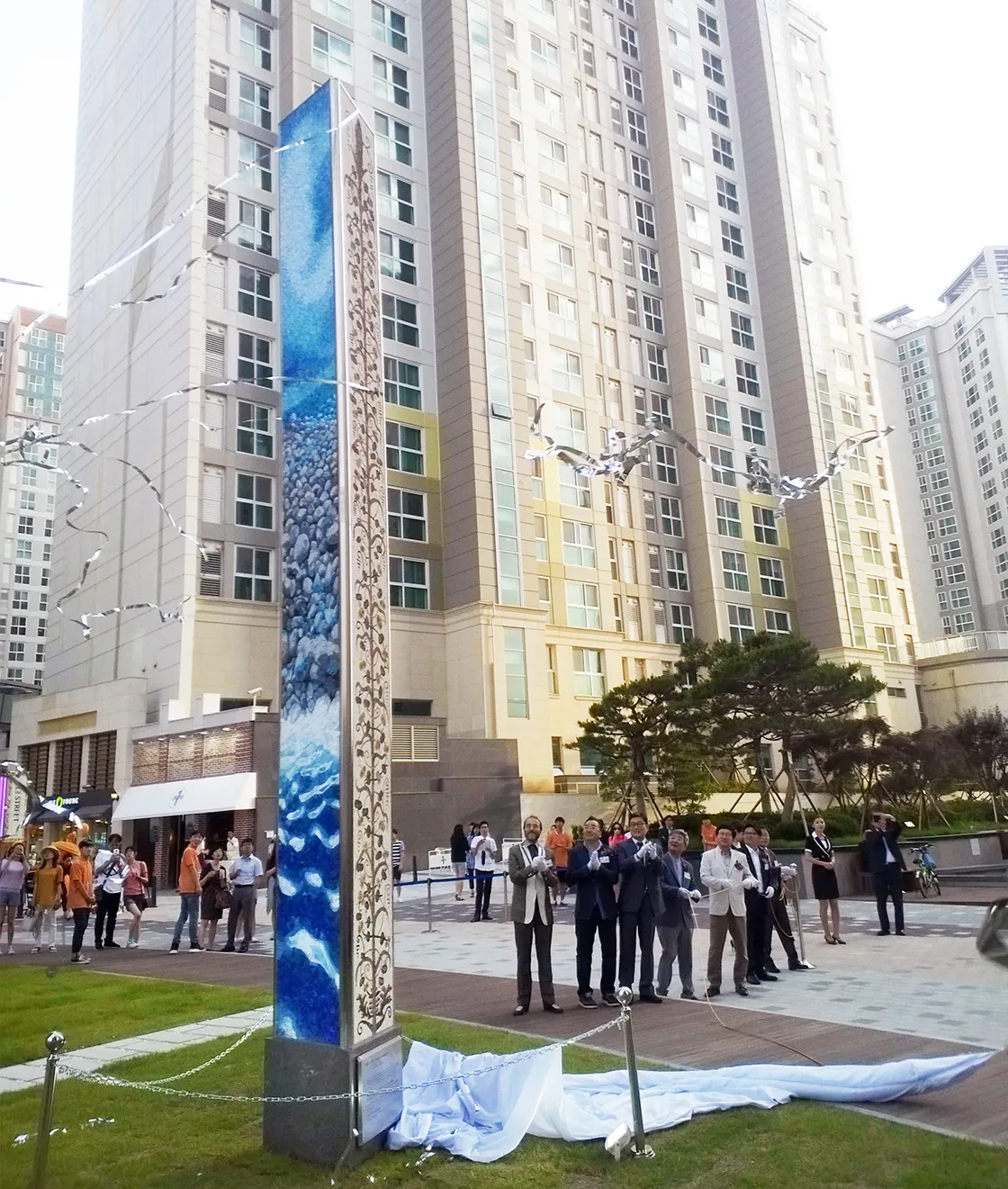
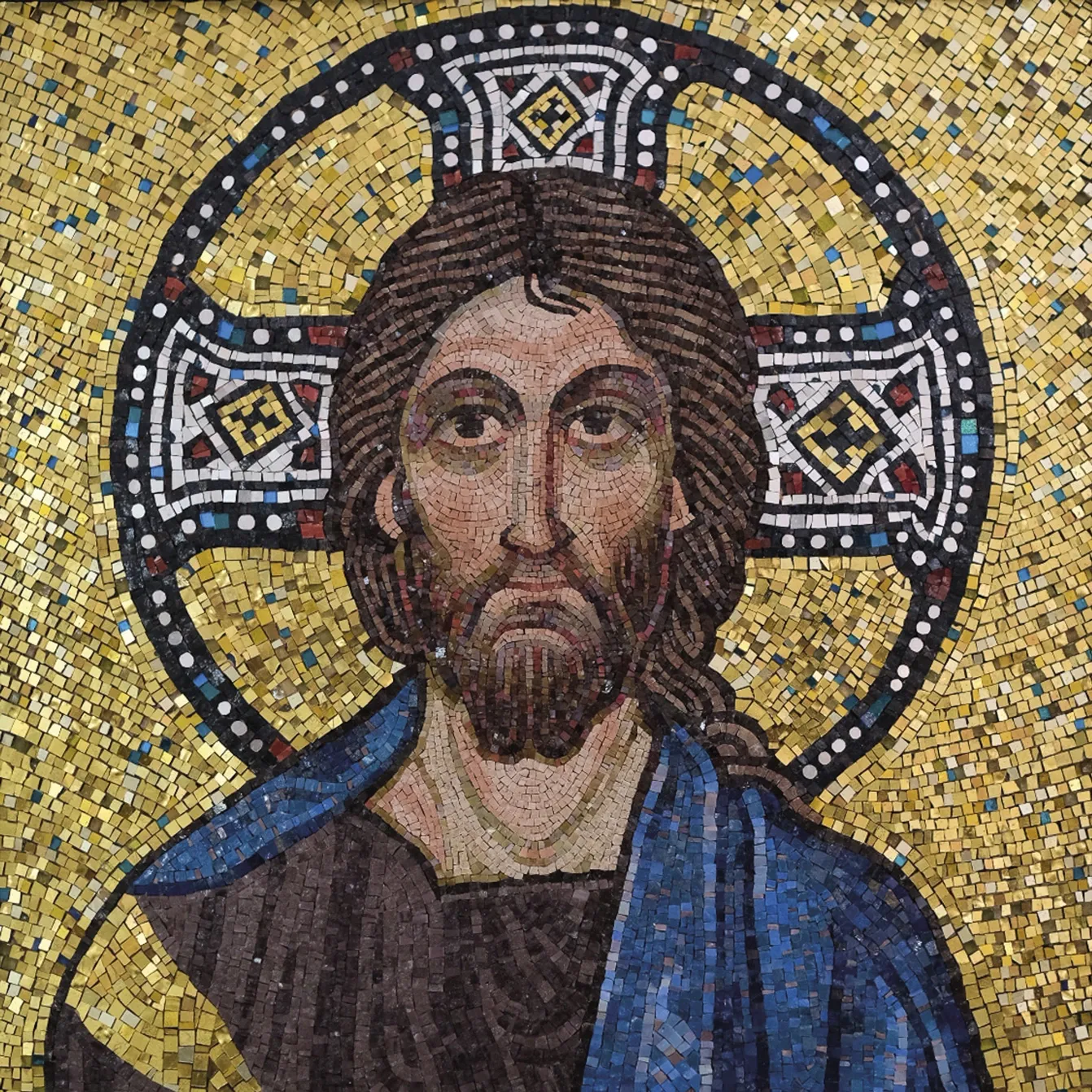
Twenty-four-carat gold leaf is fused into glass, never applied to its surface. Two methods exist. In the Murano poured method, the leaf is laid on a slab of glass still molten from the pour, and a second layer of molten glass is poured over it. In the kiln method, the leaf is set between two cold glass plates and the assembly is heated to fusion.
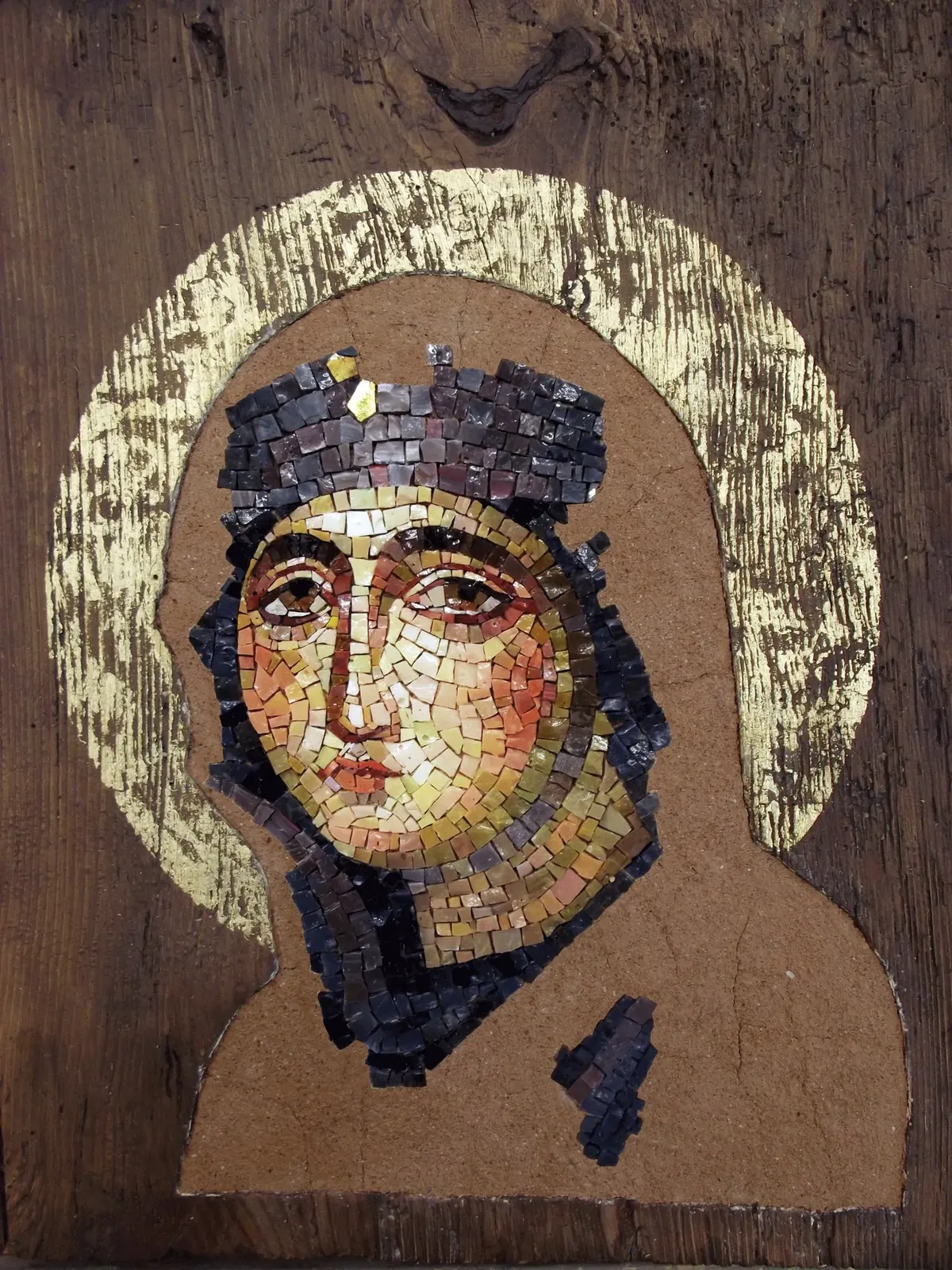
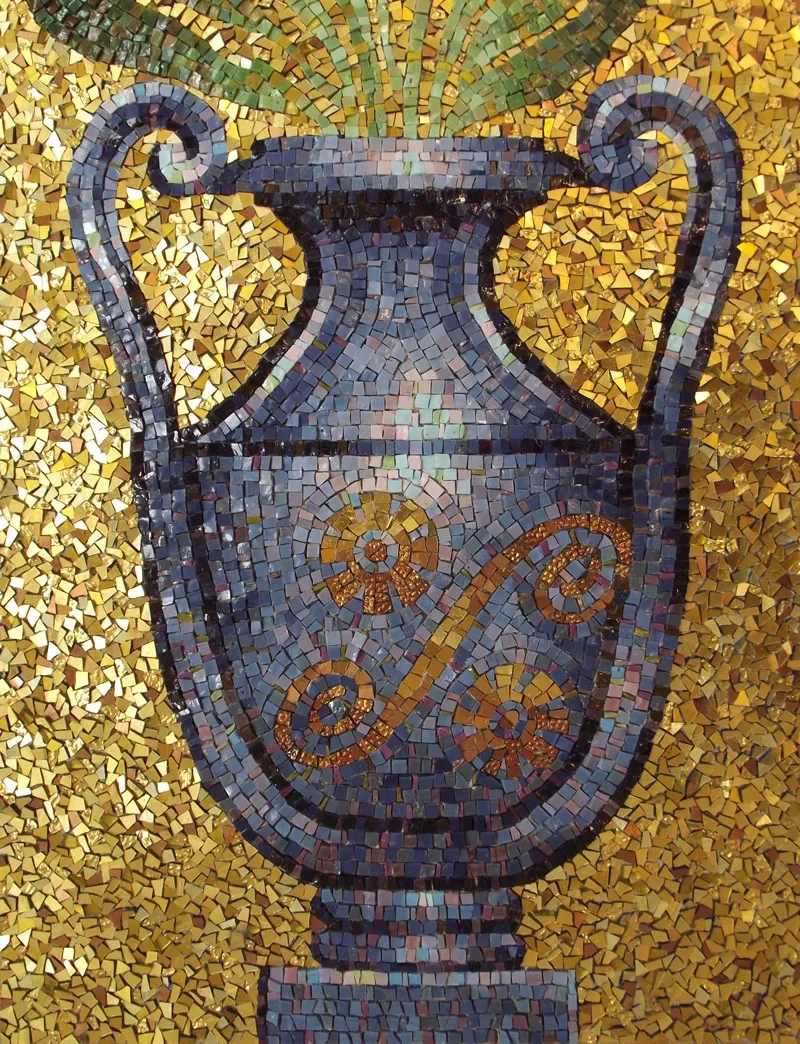
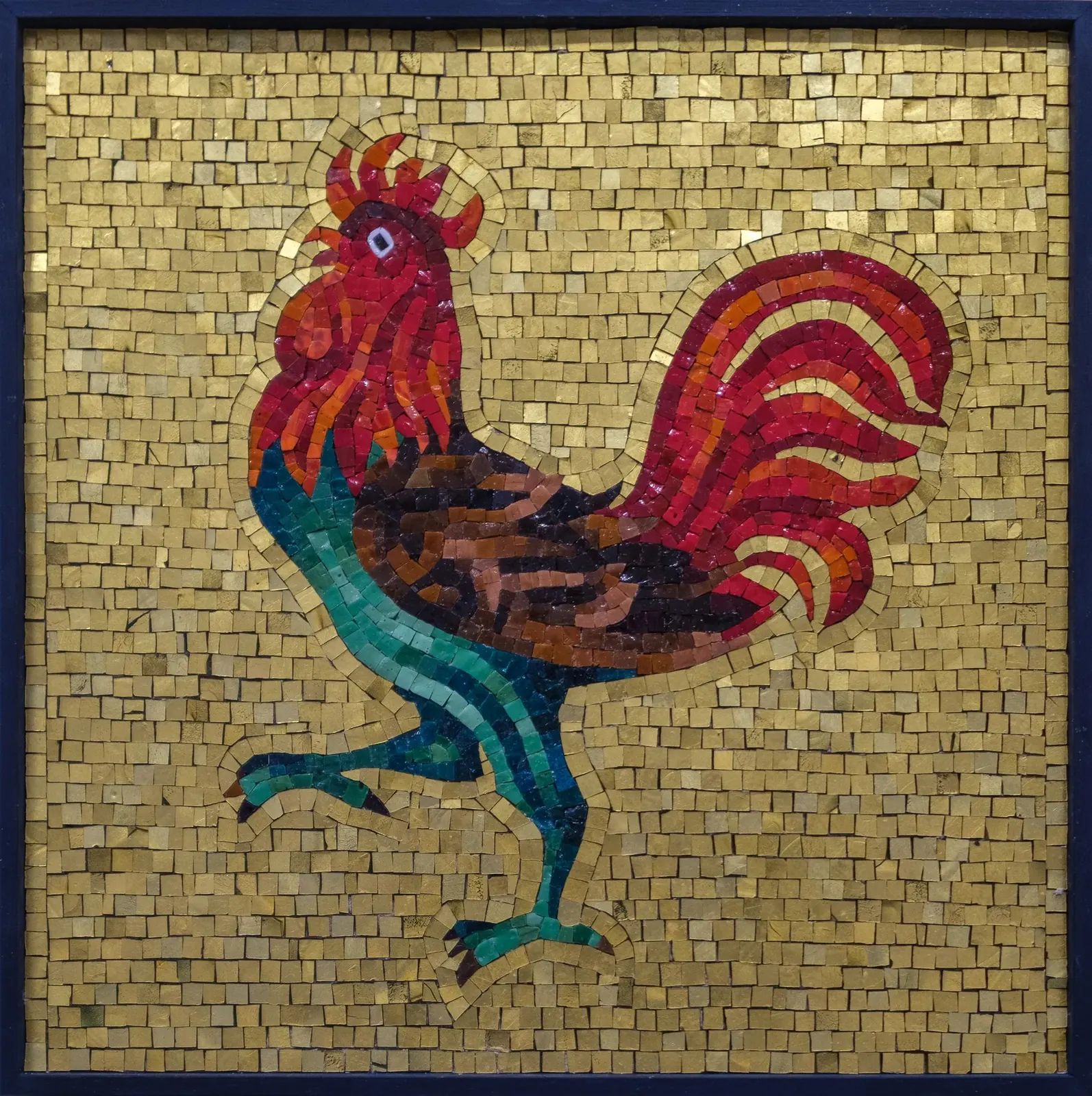
The gold ends up sealed inside. A gold ground is not a background. It is the light source. Yellow, white, red, silver, platinum. On commission.